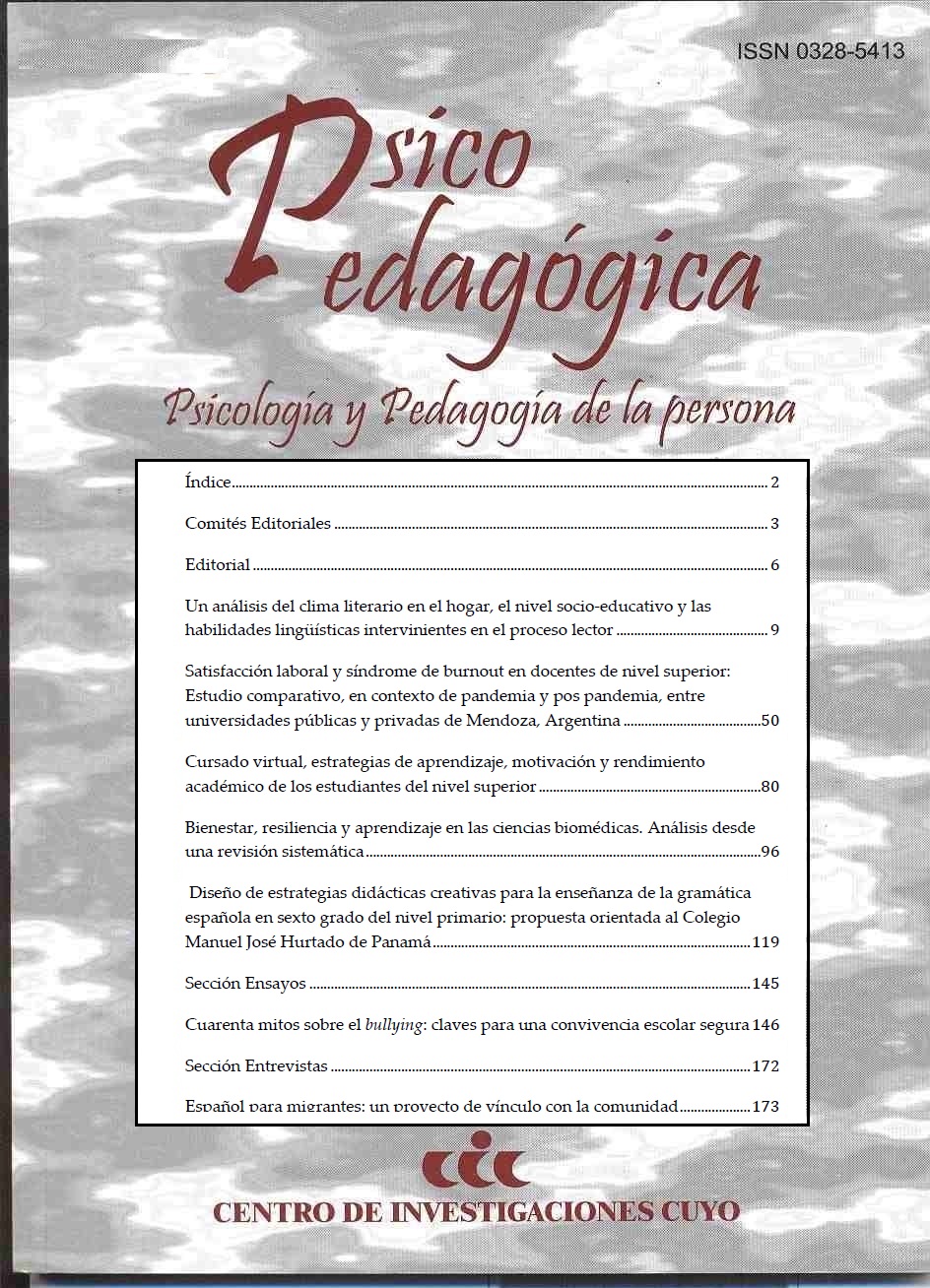
Cuarenta mitos sobre el bullying:
claves para una convivencia escolar segura
Resumen
El presente ensayo académico aborda el fenómeno del acoso escolar (bullying) y su dimensión digital (ciberbullying) desde una perspectiva crítica, científica y pedagógica. Enmarcado en el campo de la educación y la psicología escolar, el texto propone una revisión reflexiva de los discursos sociales y escolares que contribuyen a naturalizar o minimizar esta forma de violencia. Su propósito central es identificar, analizar y desarticular los mitos y creencias erróneas que la rodean. Se parte de la siguiente hipótesis: estas falacias obstaculizan la prevención y la intervención, al legitimar prácticas agresivas, responsabilizar a las víctimas o eximir a los adultos de su deber de actuar. La estrategia metodológica se basa en el análisis documental y conceptual de la literatura especializada y de la normativa vigente, complementado con una clasificación y discusión crítica de 40 mitos frecuentes sobre el bullying. Cada mito se contextualiza, se confronta con evidencia empírica y se refuta mediante argumentos científicos actualizados. El ensayo evidencia cómo la persistencia de estas creencias distorsiona la comprensión del acoso escolar y dificulta la construcción de entornos seguros. Se concluye que desmitificar el bullying es una condición indispensable para fortalecer la intervención educativa, empoderar a las víctimas y promover una convivencia escolar basada en el respeto y los derechos humanos.
Citas
Aguilar Cárceles, M. M. (2018). Tipología de la conducta suicida. E-Eguzkilore. Zientzia Kriminologikoen Aldizkari Elektronikoa, 3, 1–51. https://ojs.ehu.eus/index.php/eguzkilore/ article/view/19163
Albayrak, S., Yildiz, A., & Erol, S. (2016). Assessing the effect of school bullying prevention programs on reducing bullying. Children and Youth Services Review, 63, 1–9. https://doi.org/10.1016/J.CHILDYOUTH.2016.02.005
Andreou, E., Roussi-Vergou, C., Didaskalou, E., & Skrzypiec, G. (2020). School bullying, subjective well-being, and resilience. Psychology in the Schools, 57(8), 1193–1207. https://doi.org/10.1002/PITS.22409
Arseneault, L. (2018). Annual Research Review: The persistent and pervasive impact of being bullied in childhood and adolescence: implications for policy and practice. Journal of Child Psychology and Psychiatry, 59(4), 405–421. https://doi.org/10.1111/JCPP.12841
Avilés Martínez, J. M. (2019). Convivir sin bullying: Compartiendo relaciones de respeto. Narcea Ediciones.
Axford, N., Farrington, D. P., Clarkson, S., Bjornstad, G. J., Wrigley, Z., & Hutchings, J. (2015). Involving parents in school-based programmes to prevent and reduce bullying: What effect does it have? Journal of Children’s Services, 10(3), 242–251. https://doi.org/10.1108/JCS-05-2015-0019/FULL/XML
Bansal, S., Garg, N., Singh, J., & Van Der Walt, F. (2024). Cyberbullying and mental health: past, present and future. Frontiers in Psychology, 14, 1279234. https://doi.org/10.3389/ FPSYG.2023.1279234
Bolton, J. (2011). Psychosocial Factors Associated with Bullying Typologies in a Mental Health Population of Adolescents. PCOM Psychology Dissertations. https://digitalcommons. pcom.edu/psychology_dissertations/177
Borg, M. G. (1998). The Emotional Reactions of School Bullies and their Victims. Educational Psychology, 18(4), 433–444. https://doi.org/10.1080/0144341980180405
Bradshaw, C. P. (2013). Preventing Bullying through Positive Behavioral Interventions and Supports (PBIS): A Multitiered Approach to Prevention and Integration. Theory Into Practice, 52(4), 288–295. https://doi.org/10.1080/00405841.2013.829732
Carrera, M. V., DePalma, R., & Lameiras, M. (2011). Toward a More Comprehensive Understanding of Bullying in School Settings. Educational Psychology Review, 23(4), 479–499. https://doi.org/10.1007/S10648-011-9171-X/METRICS
Castro Santander, A. (2013). Formar para la ciberconvivencia Internet y prevención del ciberbullying. Revista Integra Educativa, 6(2), 49–70. http://www.scielo.org.bo/ scielo.php?pid=S1997-40432013000200004&script=sci_arttext
Castro Santander, A. (2025). La cara oculta del Bullying. Errores, mitos y oportunistas del miedo. Homo Sapiens Ediciones.
Chan, S. F., La Greca, A. M., & Peugh, J. L. (2019). Cyber victimization, cyber aggression, and adolescent alcohol use: Short-term prospective and reciprocal associations. Journal of Adolescence, 74(1), 13–23. https://doi.org/10.1016/J.ADOLESCENCE.2019.05.003
Connaughton, M., Mitchell, O., Cullen, E., O’Connor, M., Banaschewski, T., Barker, G., Bokde, A. L., Bruhl, R., Desrivieres, S., Flor, H., Garavan, H., Gowland, P. A., Grigis, A. A., Heinz, A., Lemaitre, H., Martinot, J.-L., Martinot, M.-L. P., Artiges, E., Nees, F., … Roddy, D. (2024). Bullying and Early Brain Development: A Longitudinal Structural Magnetic Resonance Imaging Study from Adolescence to Early Adulthood. BioRxiv, 2024.09.11.611600. https://doi.org/10.1101/2024.09.11.611600
Cuevas, M. C., Alejandra, M., & Medina, M. (2016). Observadores: un rol determinante en el acoso escolar. Pensamiento Psicológico, 14(1), 89–102. https://doi.org/10.11144/ JAVERIANACALI.PPSI14-1.ORDA
de Lara, E. W. (2012). Why Adolescents Don’t Disclose Incidents of Bullying and Harassment. Journal of School Violence, 11(4), 288–305. https://doi.org/10.1080/15388220. 2012.705931
Dordolo, N. (2014). The Role of Power Imbalance in Cyberbullying. The Undergraduate Journal of Psychology, 3, 35–41. https://www.semanticscholar.org/paper/The-Role-of-Power-Imbalance-in-Cyberbullying-Dordolo/675929537e8613e97cb8baddc3b711717f775692
Expósito, C. D., Marsollier, R. G., Difabio de Anglat, H., & Castro-Santander, A. (2023). Construcción y validación del Cuestionario de Acoso y Ciberacoso Escolar (CACE) mediante juicio de expertos. Revista Evaluar, 23(1), 61–79. https://doi.org/10.35670/1667-4545.V23.N1.41014
Expósito, C. D., Marsollier, R. G., Santander, A. C., Anglat, H. D. de, & Bertancud, G. (2024). Acoso y ciberacoso escolar. Un instrumento para su medición. Investigación Ciencia y Universidad, 8(11), 14–22. https://doi.org/10.59872/ICU.V8I11.497
Fraguas, D., Diáz-Caneja, C. M., Ayora, M., Durán-Cutilla, M., Abregú-Crespo, R., Ezquiaga-Bravo, I., Martín-Babarro, J., & Arango, C. (2021). Assessment of School Anti-Bullying Interventions: A Meta-analysis of Randomized Clinical Trials. JAMA Pediatrics, 175(1), 44–55. https://doi.org/10.1001/JAMAPEDIATRICS.2020.3541
Gaffney, H., Farrington, D. P., & Ttofi, M. M. (2019). Examining the Effectiveness of School-Bullying Intervention Programs Globally: a Meta-analysis. International Journal of Bullying Prevention, 1(1), 14–31. https://doi.org/10.1007/S42380-019-0007-4/TABLES/4
García Álvarez, J. I. (2013). Acoso escolar, transición de víctima a agresor. | EBSCOhost. Revista Mexicana de Orientación Educativa, 10(24). https://pepsic.bvsalud.org/scielo.php?pid=S1665-75272013000100007&script=sci_arttext&tlng=es
García-Díaz, V., Urbano-Contreras, A., Iglesias-García, M. T., & Álvarez-Blanco, L. (2023). Identification, Witnessing and Reaction to School Bullying Behaviour in Secondary Education. Child Indicators Research, 16(4), 1627–1641. https://doi.org/10.1007/S12187-023-10023-3/TABLES/9
Gönültaş, S., & Mulvey, K. L. (2021). Bystander responses to bias-based bullying and retaliation: Is retaliation perceived as more acceptable than bias-based bullying? The British Journal of Developmental Psychology, 39(3), 442–461. https://doi.org/10.1111/BJDP.12371
Hinduja, S., & Patchin, J. (2015). Bullying Beyond the Schoolyard: Preventing and Responding to Cyberbullying. Corwin.
Hung Kee, D. M., Lutf Al-Anesi, M. A., & Lutf Al-Anesi, S. A. (2022). Cyberbullying on social media under the influence of COVID-19. Global Business and Organizational Excellence, 41(6), 11–22. https://doi.org/https://doi.org/10.1002/joe.22175
Hymel, S., & Swearer, S. M. (2015). Four decades of research on school bullying: An Introduction. American Psychologist, 70(4), 293–299. https://doi.org/10.1037/A0038928
Jiménez-Barbero, J. A., Ruiz-Hernández, J. A., Llor-Zaragoza, L., Pérez-García, M., & Llor-Esteban, B. (2016). Effectiveness of anti-bullying school programs: A meta-analysis. Children and Youth Services Review, 61, 165–175. https://doi.org/10.1016/J.CHILDYOUTH.2015.12.015
Kerman, B. S. (2022). Asociación entre cyberbullying y depresión en adolescentes. Una revisión sistémica. Psicología UNEMI, 6(11), 166–180. https://doi.org/10.29076/ISSN.2602-8379VOL6ISS11.2022PP166-180P
Kim, S. S., Craig, W. M., King, N., Bilz, L., Cosma, A., Molcho, M., Qirjako, G., Gaspar De Matos, M., Augustine, L., Šmigelskas, K., & Pickett, W. (2022). Bullying, Mental Health, and the Moderating Role of Supportive Adults: A Cross-National Analysis of Adolescents in 45 Countries. International Journal of Public Health, 67. https://doi.org/10.3389/ IJPH.2022.1604264
Kowalski, R. M., & Limber, S. P. (2013). Psychological, Physical, and Academic Correlates of Cyberbullying and Traditional Bullying. Journal of Adolescent Health, 53(1), S13–S20. https://doi.org/10.1016/J.JADOHEALTH.2012.09.018
Lampridis, E. (2015). Stereotypical Beliefs about Cyber Bullying: An Exploratory Study in Terms of Myths. Universal Journal of Educational Research, 3(2), 135–147. https://doi.org/ 10.13189/ujer.2015.030210
Ley 26206. (2006). de Educación Nacional. Boletín Oficial del Estado, 28. 14 de diciembre de 2006. Argentina. http://servicios.infoleg.gob.ar/infolegInternet/verNorma.do?id=123542
Ley 26892. (2013). Ley para la promoción de la convivencia y el abordaje de la conflictividad social en las instituciones educativas. Boletín Oficial República Argentina, 1 de octubre de 2013. https://www.argentina.gob.ar/normativa/nacional/ley-26892-220645/texto
Mandira, M. R., & Stoltz, T. (2021). Bullying risk and protective factors among elementary school students over time: A systematic review. International Journal of Educational Research, 109, 101838. https://doi.org/10.1016/J.IJER.2021.101838
Marshall, M. L., Varjas, K., Meyers, J., Graybill, E. C., & Skoczylas, R. B. (2009). Teacher Responses to Bullying: Self-Reports from the Front Line. Journal of School Violence, 8(2), 136–158. https://doi.org/10.1080/15388220802074124
McCall, R. B. (2011). Commentary: Handling long-term attrition in randomised controlled field trials: Lessons from the Bucharest Early Intervention Project and reflections on Fox et al. (2011). Journal of Child Psychology and Psychiatry, 52(9), 929–930. https://doi.org/10.1111/J.1469-7610.2011.02429.X
Menesini, E., & Salmivalli, C. (2017). Bullying in schools: the state of knowledge and effective interventions. Psychology, Health & Medicine, 22, 240–253. https://doi.org/10.1080/ 13548506.2017.1279740
Modecki, K. L., Minchin, J., Harbaugh, A. G., Guerra, N. G., & Runions, K. C. (2014). Bullying prevalence across contexts: A meta-analysis measuring cyber and traditional bullying. Journal of Adolescent Health, 55(5), 602–611. https://doi.org/10.1016/J.JADOHEALTH. 2014.06.007/ATTACHMENT/F0B83ECA-5E05-4933-8656-5C8EA07DB616/MMC1.DOCX
Musu-Gillette, L., Zhang, A., Wang, K., Zhang, J., Kemp, J., Diliberti, M., & Oudekerk, B. A. (2017). Indicators of School Crime and Safety: 2017. U.S. Department of Education. https://nces.ed.gov/pubs2018/2018036.pdf
Nguyen, M. H. (2023). “Maybe I should get rid of it for a while…”: Examining motivations and challenges for social media disconnection. Communication Review, 26(2), 125–150. https://doi.org/10.1080/10714421.2023.2195795;PAGE:STRING:ARTICLE/CHAPTER
Olweus, D. (1978). Aggression in the schools: Bullies and whipping boys. Hemisphere. https://psycnet.apa.org/record/1979-32242-000
Olweus, D. (1993). Bullying at school: What we know and what we can do. Blackwell Publishers.
ONU. (2016). Informe del Secretario General sobre la protección de los niños contra el acoso. A/71/213. Organización de las Naciones Unidas. https://www.acnur.org/fileadmin/ Documentos/BDL/2016/10749.pdf
Orue, I., & Calvete, E. (2019). Psychopathic Traits and Moral Disengagement Interact to Predict Bullying and Cyberbullying Among Adolescents. Journal of Interpersonal Violence, 34(11), 2313–2332. https://doi.org/10.1177/0886260516660302
Paljakka, A. (2023). Teachers’ Awareness and Sensitivity to a Bullying Incident: A Qualitative Study. International Journal of Bullying Prevention, 6(3), 322–340. https://doi.org/10.1007/S42380-023-00185-7/TABLES/4
Pascoe, C. J. (2022). Bullying as a Social Problem. In The Sociology of Bullying (pp. 76–94). NYU Press. https://doi.org/10.18574/NYU/9781479803873.003.0006
Peltzer, K., & Pengpid, S. (2021). Health risk behaviours among adolescents in Argentina: trends between 2007, 2012 and 2018 national cross-sectional school surveys. BMC Pediatrics, 21(1), 1–11. https://doi.org/10.1186/S12887-021-02929-0/TABLES/4
Radliff, K. M., Wang, C., & Swearer, S. M. (2016). Bullying and Peer Victimization. Journal of Interpersonal Violence, 31(11), 1983–2005. https://doi.org/10.1177/0886260515572476
Ruslan, Z., & Rezkiani, K. (2023). How Bullying Can Happen? Systematic Literature Review of Bullying at the Elementary School Level. Journal Of Education And Teaching Learning (JETL), 5(2), 165–184. https://doi.org/10.51178/JETL.V5I2.1308
Sabella, R. A., Patchin, J. W., & Hinduja, S. (2013). Cyberbullying myths and realities. Computers in Human Behavior, 29(6), 2703–2711. https://doi.org/10.1016/J.CHB.2013.06.040
Salmivalli, C. (1999). Participant role approach to school bullying: implications for interventions. Journal of Adolescence, 22(4), 453–459. https://doi.org/10.1006/JADO.1999.0239
Salmivalli, C. (2001). Peer-led intervention campaign against school bullying: who considered it useful, who benefited? Educational Research, 43(3), 263–278. https://doi.org/10.1080/ 00131880110081035
Salmivalli, C. (2010). Bullying and the peer group: A review. Aggression and Violent Behavior, 15(2), 112–120. https://doi.org/10.1016/J.AVB.2009.08.007
Salmivalli, C. (2014). Participant Roles in Bullying: How Can Peer Bystanders Be Utilized in Interventions? Theory Into Practice, 53(4), 286–292. https://doi.org/10.1080/ 00405841.2014.947222
Smith, P. K. (2016). Bullying: Definition, Types, Causes, Consequences and Intervention. Social and Personality Psychology Compass, 10(9), 519–532. https://doi.org/10.1111/ SPC3.12266
Smith, P. K. (2019). Introduction. In Making an impact on school bullying: interventions and recommendations (pp. 1–22). Routledge.
Smith, P. K., & Sharp, S. (1994). School bullying : insights and perspectives. Routledge.
Swearer, S. M., & Hymel, S. (2015). Understanding the psychology of bullying: Moving toward a social-ecological diathesis-stress model. American Psychologist, 70(4), 344–353. https://doi.org/10.1037/A0038929
Talpur, B. A., & O’Sullivan, D. (2020). Cyberbullying severity detection: A machine learning approach. PLoS ONE, 15(10), e0240924. https://doi.org/10.1371/JOURNAL.PONE.0240924
Thornberg, R., & Jungert, T. (2013). Bystander behavior in bullying situations: Basic moral sensitivity, moral disengagement and defender self-efficacy. Journal of Adolescence, 36(3), 475–483. https://doi.org/10.1016/J.ADOLESCENCE.2013.02.003
Thornberg, R., Landgren, L., & Wiman, E. (2018). ‘It Depends’: A qualitative study on how adolescent students explain bystander intervention and non-intervention in bullying situations. School Psychology International, 39(4), 400–415. https://doi.org/10.1177/ 0143034318779225/ASSET/IMAGES/LARGE/10.1177_0143034318779225-FIG1.JPEG
Thornberg, R., Tenenbaum, L., Varjas, K., Meyers, J., Jungert, T., & Vanegas, G. (2012). Bystander Motivation in Bullying Incidents: To Intervene or Not to Intervene? Western Journal of Emergency Medicine, 13(3), 247. https://doi.org/10.5811/WESTJEM.2012.3.11792
Tight, M. (2023). Bullying in higher education: an endemic problem? Tertiary Education and Management, 29(2), 123–137. https://doi.org/10.1007/S11233-023-09124-Z/METRICS
UNESCO. (2019). Behind the numbers: ending school violence and bullying. In Sustainable Development Goals: Education 2030. Organización de las Naciones Unidas para la Educación, la Ciencia y la Cultura. https://unesdoc.unesco.org/ark:/48223/pf0000366483
UNESCO. (2024). Entornos de aprendizaje seguros: Prevención y tratamiento de la violencia en la escuela y sus alrededores. Organización de las Naciones Unidas para la Educación, la Ciencia y la Cultura. https://www.unesco.org/es/health-education/safe-learning-environments?utm_source=chatgpt.com
Velasco, J., Amado, B. G., & Novo, M. (2017). Comunicación, Movilización y Participación desde las redes sociales en un proyecto social. In Proceedings of the Congreso Internacional e Interuniversitario Contra la Pobreza Infantil en el Mundo. https://www.researchgate.net/publication/296443770_Diferencias_de_genero_en_las_conductas_de_acoso_escolar
Volk, A. A., Dane, A. V., & Marini, Z. A. (2014). What is bullying? A theoretical redefinition. Developmental Review, 34(4), 327–343. https://doi.org/10.1016/J.DR.2014.09.001
Wang, L., & Jiang, S. (2023). Effectiveness of Parent-Related Interventions on Cyberbullying Among Adolescents: A Systematic Review and Meta-Analysis. Trauma, Violence, & Abuse, 24(5), 3678–3696. https://doi.org/10.1177/15248380221137065
Wang, L., & Ngai, S. S. yum. (2022). Cyberbullying Perpetration Among Chinese Adolescents: The Role of Power Imbalance, Fun-seeking Tendency, and Attitude Toward Cyberbullying. Journal of Interpersonal Violence, 37(23–24), NP21646–NP21671. https://doi.org/ 10.1177/08862605211062988
Wright, M. F. (2019). Cyberbullying: Bullying in the Digital Age. IGI Global. https://doi.org/10.4018/978-1-5225-0522-8.CH003
Yang, S. A., & Kim, D. H. (2017). Factors associated with bystander behaviors of Korean youth in school bullying situations. Medicine (United States), 96(32). https://doi.org/10.1097/ MD.0000000000007757
Yun, J. Y., Shim, G., & Jeong, B. (2019). Verbal Abuse Related to Self-Esteem Damage and Unjust Blame Harms Mental Health and Social Interaction in College Population. Scientific Reports 2019 9:1, 9(1), 1–13. https://doi.org/10.1038/s41598-019-42199-6
Zhao, N., Yang, S., Zhang, Q., Wang, J., Xie, W., Tan, Y., & Zhou, T. (2023). School Bullying Results in Poor Psychological Conditions: Evidence from a Survey of 95,545 Subjects. Frontiers in Psychology, 15. https://doi.org/10.3389/fpsyg.2024.1279872
Zhu, C., Huang, S., Evans, R., & Zhang, W. (2021). Cyberbullying Among Adolescents and Children: A Comprehensive Review of the Global Situation, Risk Factors, and Preventive Measures. Frontiers in Public Health, 9, 634909. https://doi.org/10.3389/FPUBH.2021.634909/BIBTEX
Zych, I., Ttofi, M. M., & Farrington, D. P. (2016). Empathy and Callous–Unemotional Traits in Different Bullying Roles: A Systematic Review and Meta-Analysis. Trauma, Violence, and Abuse, 20(1), 3–21. https://doi.org/10.1177/1524838016683456/ASSET/IMAGES/ LARGE/10.1177_1524838016683456-FIG6.JPEG